
Marion County Parole Versus Probation
Parole and probation can both involve community supervision, but they begin in different places. Parole applies when the Georgia State Board of Pardons and Paroles allows an eligible state prisoner to leave prison before the sentence fully ends. Probation is imposed by a court. It can be the main sentence, part of a split sentence after confinement, or a term that follows county jail time.
The Georgia Department of Community Supervision, or DCS, generally supervises adult felony probation and parole in the community. The Parole Board makes parole decisions. The sentencing court creates probation and holds the controlling court record. This agency split matters when verifying a Marion County person.
| Question | Parole | Probation |
|---|---|---|
| How it begins | Parole Board action after a GDC prison sentence | Court sentence or later court order |
| Best public record | Parolee Database, GDC status, and Board records | Sentencing order, docket, and supervision record |
| Decision authority | Georgia State Board of Pardons and Paroles | The sentencing court |
| Community supervision | Generally administered through DCS | Generally administered through DCS for adult felony cases |
| How it ends | Discharge, sentence completion, or other Board action | Completion, termination, discharge, or court action |
- Parole
- Conditional release from state prison before the sentence fully expires.
- Probation
- A court-ordered period of supervision that may replace or follow confinement.
- Discharge
- The formal end of a supervision obligation shown by the responsible authority.
- Absconder
- A person an agency reports as having stopped required contact or left supervision without approval.
Verify Marion County Post-Release Supervision
Start with the last confirmed custody and the sentence. A person who posted bond at Marion County Jail is not automatically on parole. Someone released from GDC to parole should be checked through the Board's public parolee tool. A probation sentence is best established through the court disposition because a public parole search will not prove probation.
- Identify whether the person served a GDC prison sentence, a county jail term, or received a court sentence without prison.
- For possible parole, search the official Georgia Parolee Database with an accurate name and available identifiers.
- Compare the result with the GDC record to confirm that state-prison custody ended.
- For probation, obtain the Marion County court disposition, sentencing order, or revocation record.
- Ask DCS or the named supervising office to confirm the correct reporting route when a verified record identifies supervision.
- For a final end date, seek a discharge order or agency record rather than inferring completion.
A blank parolee result has several possible meanings. The person may have maxed out the prison sentence, completed parole, received probation instead, moved under an interstate compact, or been searched under the wrong spelling or ID. It does not prove present confinement. The Marion County released inmate record path separates a jail release, state discharge, federal release, and transfer.
Note: Match the person, agency, and sentence before treating any supervision result as current.
Marion County TPM and Parolee Search
The Parole Board provides two public tools for different stages. The Inmate TPM Lookup applies before release while the Board considers an eligible state prisoner. A Tentative Parole Month, or TPM, is the month for final review and possible setting of a date. The Board says it is not a final decision. Misconduct or an unmet condition can postpone or cancel it.
The Georgia Parolee Database applies after release to parole supervision. A match supports the fact that the person left prison on parole but remains subject to supervision. Life-sentence cases can receive grant or deny decisions instead of the standard TPM result. Eligibility is also not release. Sentence and offense exceptions apply.
The official Parolee Search form shows the lookup used for a person already released to parole.
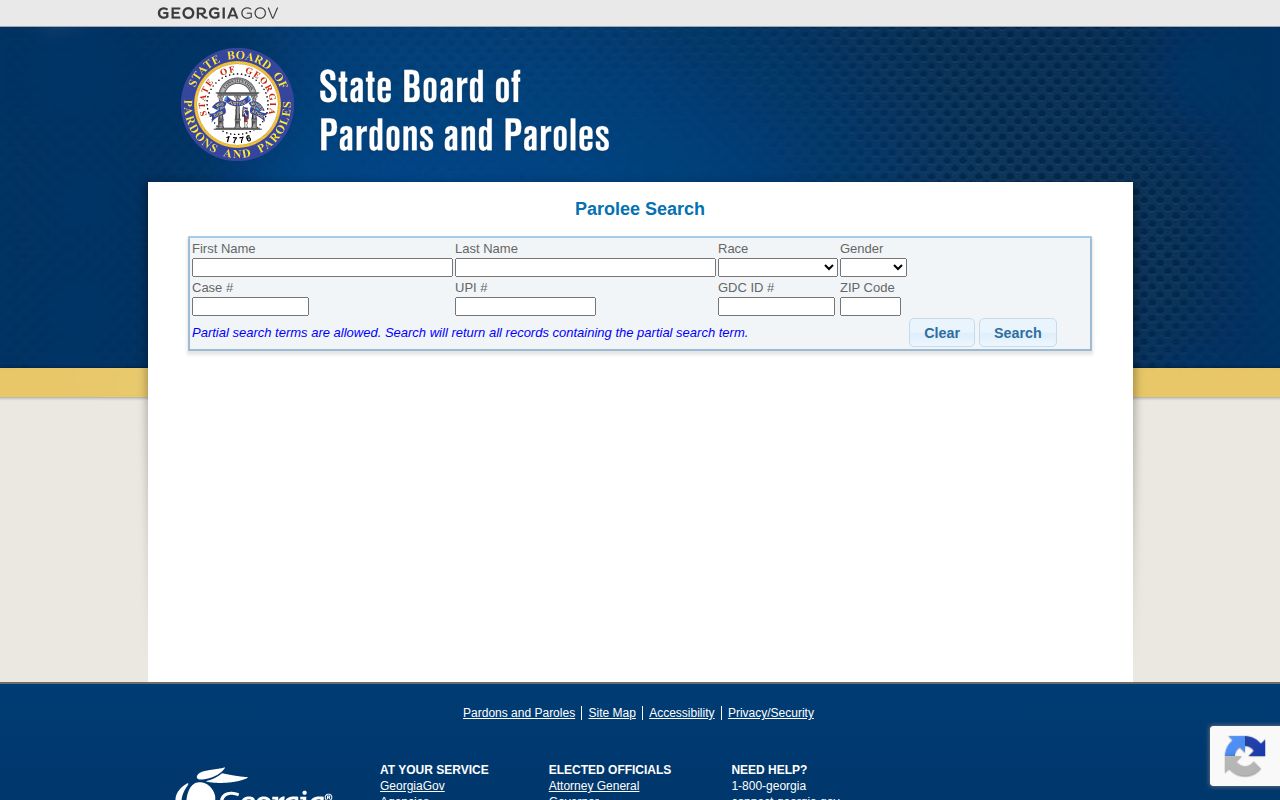
The form is distinct from the pre-release TPM tool, reflecting two separate stages in Georgia's parole process.
Marion County Supervision Is State-Centered
Marion County post-release supervision information is state-centered and supported by the local judicial circuit. The Parole Board makes parole decisions, and DCS generally manages adult felony supervision. The research did not verify a stand-alone Marion County DCS reporting office. A specific local office, address, or reporting schedule should not be guessed.
Use the Board's call center for parole consideration and eligibility questions, then use DCS channels when a verified record identifies community supervision. Sheriff Derrell Neal's office can address Marion County jail and warrant records, but a county jail release does not by itself place someone on parole. The court clerk remains the source for the sentence that created probation.
Georgia State Board of Pardons and Paroles2 Martin Luther King, Jr. Drive SE
Suite 430, Balcony Level, West Tower
Atlanta, GA 30334
Call center: (404) 656-4661
The Parole Board homepage links the TPM and parolee tools and provides the current state contact route.
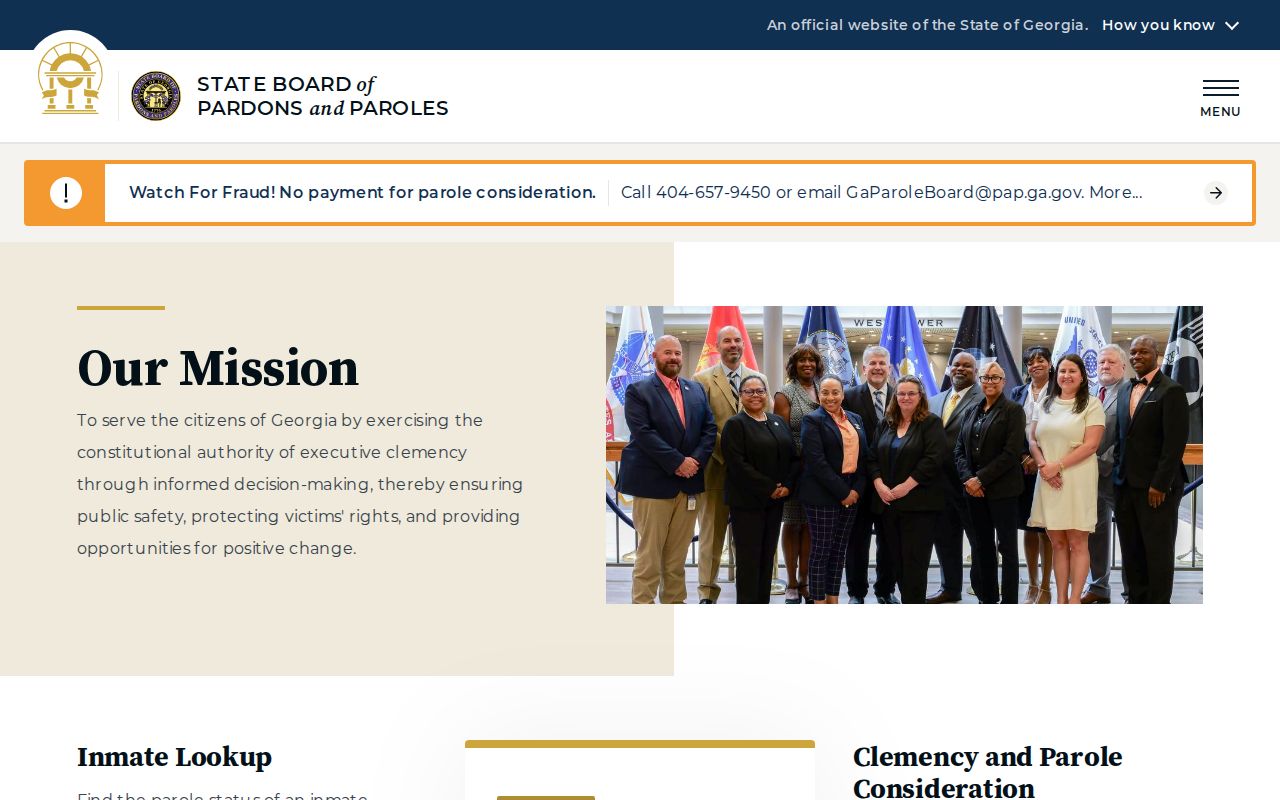
Those state tools should be paired with the Marion County court record when probation or sentence terms are in question.
Marion Supervision Conditions and Violations
Conditions vary by the sentence, Board decision, and supervision plan. They may address reporting, travel, treatment, payments, contact, or other conduct, but only the person's order and supervising agency establish the actual terms. A public status result should not be used to guess a condition or accuse someone of violating it.
A violation can lead to an agency response, a court filing, a warrant, a revocation process, or renewed custody. An absconder status means the supervising authority reports that required contact has stopped or that the person left supervision without approval. A warrant may come from the sheriff, court, Parole Board, or another authority. Confirm the source and whether it remains active.
Historical release and current warrant status can both be true. A person may have left custody on one date and later become wanted for failure to report or a new case. The court docket can show a bench warrant or probation revocation. Parole records can show a supervision problem. A current warrant does not erase the earlier release event.
Correct Marion County Jail Credit
Release-date correction in Georgia may require both GDC and the county clerk. GDC's family guidance says time-computation or jail-credit concerns should begin with the prisoner's counselor and may require contact with the clerk in the county of conviction. A Marion County sentencing record can therefore affect the state computation long after the person left the county jail.
Compare the sentencing order, credit for time served, the GDC computation, and the Parole Board record. These documents may describe distinct stages rather than a true conflict. A county release date can mark transfer into GDC, while the state record later carries a Maximum Release Date, a TPM, and an actual parole or max-out release.
The GDC family questions page identifies this counselor-and-clerk correction path. Ask the Marion County clerk what jail credit the court transmitted and whether an amended sentence order exists. GDC applies the state computation, while the Parole Board controls its own release decision.
Marion County Release Notifications
Georgia has more than one notification layer. Georgia VINE can report custody changes from participating agencies. The Georgia Office of Victim Services operates the V.I.P. automated information system for state offender release information. Its toll-free automated line is 1-800-593-9474, and the office lists 404-651-6668 for more information.
The Chattahoochee Judicial Circuit victim-witness locations page lists Marion County at 100 W Burkhalter Avenue in Buena Vista, and the circuit contact page identifies staff serving Marion County. This is a case-notice and court-process resource, not a general parole or probation locator. It can help connect custody changes with events in the underlying case.
Use each channel for its proper role. VINE reports participating-agency custody changes. V.I.P. addresses state victim-services notice. The circuit program assists with case notice. The Parolee Database verifies public parole status, while a court disposition establishes probation. No one alert replaces the formal supervision or discharge record.
Note: Automated notice can lag the agency event, so confirm an urgent change with the responsible office.
End Marion County Supervision
Supervision ends through an official event, not merely because a projected date passed or a public search stopped returning a name. Parole may end through discharge, expiration of the sentence, or another Board action. Probation may end through completion, early termination, discharge, or a court order. The exact route depends on the record and authority.
For parole, seek the Board or supervising agency record showing discharge. For probation, obtain the sentencing docket and any completion or termination order. If the public tool no longer shows the person, ask the agency to distinguish discharge from a name mismatch, interstate transfer, or limited public display.
A discharge from supervision differs from release from Marion County Jail and from release from GDC custody. Those events can occur years apart. Record the date and authority for each stage: county jail departure, state-prison release, start of supervision, and final discharge. That timeline gives the clearest account of Marion County post-release status.
Keep the discharge document with the earlier sentence and release records. Together, they show both when custody changed and when the later legal duty ended.